
A dietitian’s guide to the best creatine for women, including powder, gummies, and stick packs—plus what to look for, how to choose, and who each option is best for.


This post may contain affiliate links. Full disclosure ↓
Last updated: August 31, 2026
If you’re trying to figure out the best creatine for women over 40, you don’t need another 3,000-word science explainer. You need someone to narrow the shelf and tell you which one to grab.
That’s what this page is for.
I’m a registered dietitian, and I’ve sorted through the noise so you don’t have to. New to creatine in general? Start with my full Creatine for Women: A Dietitian’s Guide first, then come back here to pick what to buy.
How I Chose These Creatine Products
As a dietitian, I’m not chasing trendy formulas or flashy packaging. I narrowed this list using the same checklist I’d use with a client.
What earned a spot:
- Creatine monohydrate (the most-studied, most-effective form)
- Clear, sensible dosing — 3 to 5 grams per day, no loading required
- Third-party testing where available (NSF Certified for Sport, Informed Sport, or equivalent)
- Reasonable price per serving for what you get
- Minimal unnecessary extras, fillers, or proprietary blends
- A format that actually fits a real woman’s routine
What I skipped: anything with a long ingredient list pretending to be magic, anything sold mostly on packaging, and anything where I couldn’t find clear sourcing or testing info.
Best Overall: Thorne Creatine
The cleanest, most-trusted creatine on this list — and the one I recommend most often.
At a glance:
- Best for: Women who want one reliable creatine they can trust for years
- Form: Creatine monohydrate powder
- Dose: 5g per scoop, daily
- Flavor: Unflavored
- Third-party tested: NSF Certified for Sport
- Price: $44
Why I like it: Thorne is one of the most trusted brands in the entire supplement industry, and this product is NSF Certified for Sport — every batch is tested for purity and banned substances. Clean ingredients, no fillers, mixes well.
Watch-outs: Unflavored only. Slightly more than the budget pick, but the testing pedigree earns it.
Bottom line: If you want one creatine and you want to stop researching, this is it.
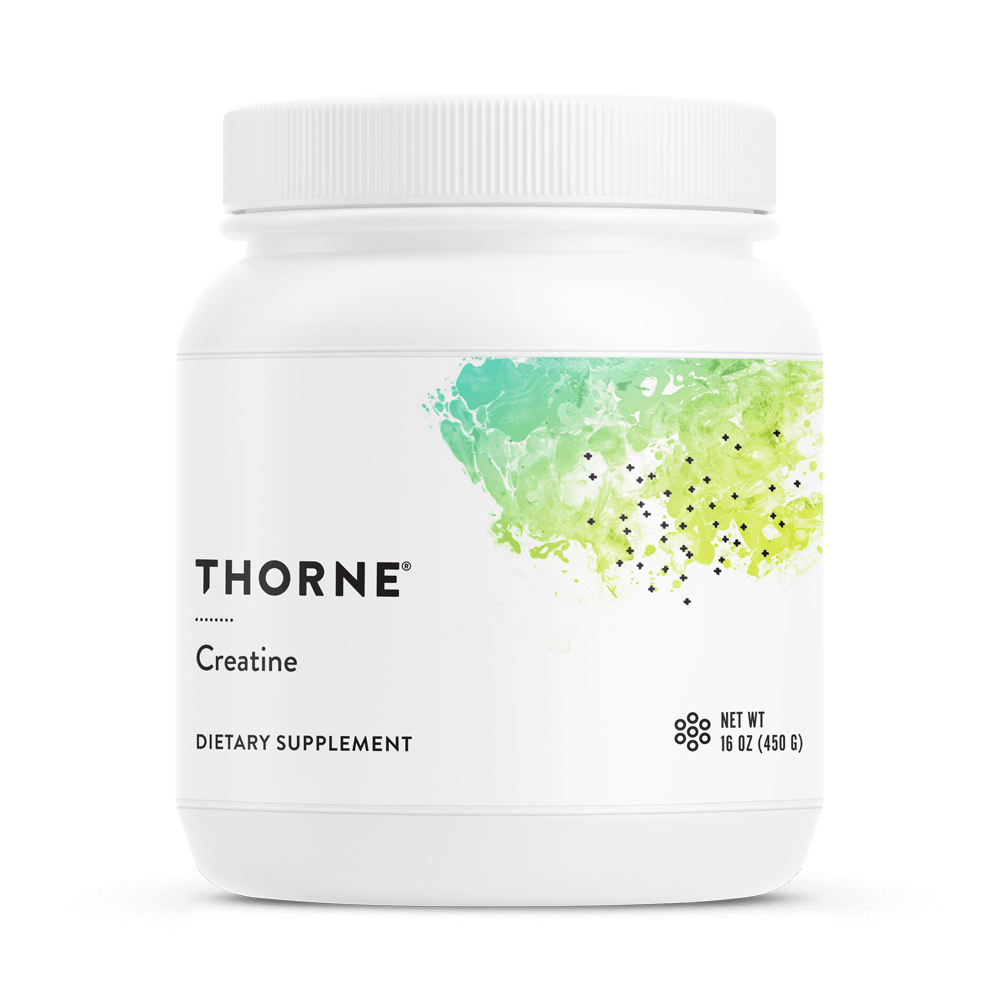
BEST OVERALL
Thorne Creatine
A pure, NSF-Certified creatine monohydrate from a brand I trust. My go-to pick for most women over 35 — clean ingredients, no fillers, and the highest level of third-party testing on the market.
NSF Certified
for Sport
for Sport
Pure
Monohydrate
Monohydrate
No Fillers
or Additives
or Additives
Best Budget: Optimum Nutrition Micronized Creatine
The classic. Same monohydrate the research is built on, at the lowest price per serving.
At a glance:
- Best for: Women who want plain monohydrate at the lowest cost
- Form: Micronized creatine monohydrate powder
- Dose: 5 g per serving, daily
- Flavor: Unflavored, Blueberry Lemonade
- Third-party tested: Informed Choice (batch-dependent)
- Price: $15
Why I like it: The micronized version mixes more easily than older gritty powders, and large tubs drive the per-serving cost way down.
Watch-outs: Quality control isn’t quite at Thorne’s pharmaceutical level. Check for the Informed Choice seal on your specific tub.
Bottom line: If budget is the deciding factor — or you want a backup tub on hand — this is the smart pick.

BEST BUDGET
Optimum Nutrition Creatine
A reliable, low-cost option with decades of research behind it. If you want plain creatine monohydrate without paying premium pricing, this is the one I point clients to.
Lowest Cost
per Serving
per Serving
Mixes
Easily
Easily
Research-
Backed
Backed
$15
(60 servings)
View on Amazon
Best Gummies: Create Creatine Gummies
The easiest way to actually stay consistent — no scoop, no shaker, no aftertaste.
At a glance:
- Best for: Women who hate mixing powder or forget supplements
- Form: Gummy
- Dose: 3 gummies = 4.5 g creatine monohydrate
- Flavor: Multiple — typically strawberry, blueberry, watermelon (lineup rotates)
- Third-party tested: Yes
- Price: $65 (20% subscription pricing available)
Why I like it: The best supplement is the one you’ll take. Create uses real creatine monohydrate (not a hidden low dose) and they taste like a treat.
Watch-outs: Higher cost per serving than powder. Adds a small amount of sugar to your day.
Bottom line: If powder is the reason you’ve quit creatine before, gummies are worth the premium.
For the deeper dive, read my full Create Creatine Gummies Review.

BEST GUMMIES
Create Creatine Gummies
Real creatine monohydrate in a chewable form. The easiest way to stay consistent if you hate mixing powder or you’re constantly traveling — no shaker, no scoop, no clumps.
No Mixing
Required
Required
Real
Monohydrate
Monohydrate
Travel-
Friendly
Friendly
Best Women-Focused Blend: Clean Nutra Shelf Builder
A premium blend built specifically for women’s strength and aging.
At a glance:
- Best for: Women who want one well-curated scoop instead of a stack of supplements
- Form: Powder blend
- Dose: Per label (typically 5 g creatine plus supporting ingredients)
- Flavor: Multiple — typically berry or citrus options
- Third-party tested: Yes
- Price: $50 — premium, frequent BOGO offers direct
Why I like it: Shelf Builder is designed with midlife strength and recovery in mind. If you like the idea of one scoop covering more than creatine, this is the splurge-worthy option.
Watch-outs: More expensive per serving than plain monohydrate. If you already take protein, collagen, or electrolytes separately, the extras may overlap.
Bottom line: A great fit if you want one premium daily scoop instead of three separate tubs.
For the deeper review, see my full Shelf Builder Creatine Review.

BEST WOMEN’S BLEND
Clean Nutra Shelf Builder
A women-focused formula that pairs creatine monohydrate with collagen and other ingredients targeting strength, recovery, and skin — designed specifically for women in the perimenopause and menopause window.
Women-
Focused
Focused
Multi-
Ingredient
Ingredient
Frequent
BOGO Offers
BOGO Offers
Best Flavored Powder: Bloom Creatine
The flavored option that actually tastes good — built on a clean monohydrate base.
At a glance:
- Best for: Women who want creatine to feel like a routine they enjoy
- Form: Creatine monohydrate powder
- Dose: 5 g per serving, daily
- Flavor: Multiple — strawberry kiwi, blueberry, tropical (rotating lineup)
- Third-party tested: Brand quality testing
- Price: $50
Why I like it: Bloom built its name on flavors that mix smoothly into plain water. If you tried unflavored creatine and hated it, this is the low-friction switch.
Watch-outs: Costs more per serving than plain monohydrate. Contains sweeteners — check the label if you avoid stevia or sucralose.
Bottom line: If “I don’t love the taste” is your real reason for skipping creatine, Bloom solves it. If you’re deciding between trendier creatine brands, I also compared Bloom vs Beam creatine to see how the dose, price, flavors, and overall value stack up.

BEST FLAVORED
Bloom Creatine
Pure creatine monohydrate with flavor options that actually taste good. The pick I send to women who want an enjoyable drink — not a gritty, chalky scoop in plain water.
Multiple
Flavors
Flavors
Mixes
Smoothly
Smoothly
Pure Mono-
hydrate Base
hydrate Base
Best for Everyday Mixability: Beam Creatine
The flavored powder that actually dissolves cleanly — no grit at the bottom of the glass.
At a glance:
- Best for: Women who want flavor without the sweetness or the clumping
- Form: Creatine monohydrate powder
- Dose: 5 g per serving, daily
- Flavor: Multiple — rotating fruit-forward lineup
- Third-party tested: Yes
- Price: $55
Why I like it: Beam earns its spot for mixability. The powder dissolves more cleanly than most flavored options. Clean ingredient list, no proprietary blend nonsense.
Watch-outs: Flavor preferences are personal — read recent reviews on your specific flavor before committing to a full tub.
Bottom line: The “in-between” pick if Bloom feels too sweet but unflavored feels too plain.

BEST MIXABILITY
Beam Creatine
Dissolves cleanly with no grit and no chalky aftertaste. If past creatines have left you with a sandy bottom-of-the-glass situation, this is the formula that fixes it.
Dissolves
Cleanly
Cleanly
Clean
Ingredients
Ingredients
Multiple
Flavors
Flavors
What Type of Creatine Is Best for Women Over 35?
Short answer: creatine monohydrate. Every product on this page uses it.
Other forms (HCl, ethyl ester, buffered, “advanced”) cost more, claim more, and don’t have the research to back them up. Stick with monohydrate. The only real decisions are powder vs. gummy vs. capsule, and flavored vs. unflavored.
For more on dosing, timing, and why monohydrate wins, see the Creatine for Women: A Dietitian’s Guide.
Powder vs. Gummies vs. Capsules
| Format | Pros | Cons | Best for |
|---|---|---|---|
| Powder | Cheapest per serving, most flexible | Need water, scoop, mixing | Anyone who’ll stay consistent |
| Gummies | Easiest to remember, no mixing | More expensive, adds sugar | Women who skip powder |
| Capsules | Travel-friendly, no taste | Often need 5+ pills per dose | Travelers, picky palates |
The “best” format is whichever one you’ll actually take five days a week. Consistency beats optimization every time.
Who Should Skip Creatine
Creatine is one of the safest, most-studied supplements available — but it’s not for everyone. Skip it (or check with your doctor first) if you:
- Have kidney disease or impaired kidney function
- Take medications that affect kidney clearance
- Are significantly under your daily protein target — fix the protein first
- Won’t realistically take it consistently
Not sure if it’s worth it for your routine? My Creatine Over 40 If You Don’t Work Out: Is It Worth It? post walks through who actually benefits.
Creatine Buying Mistakes to Avoid
A few traps I see all the time:
- Falling for “advanced” forms. Plain monohydrate has the research. Anything else is marketing.
- Buying based on packaging. Pretty tubs don’t mean better creatine. Check the form, dose, and testing.
- Skipping third-party testing entirely. It’s not required, but it’s a meaningful trust signal.
- Choosing a format you’ll quit. If you hate the texture of powder in water, don’t buy a tub of unflavored powder. Buy gummies or a flavored option.
- Loading at 20 grams a day. Unnecessary for most women. 3 to 5 grams daily gets you there in three to four weeks.
FAQ
Is creatine safe for women over 40? Yes, for healthy adults at the standard 3 to 5 gram daily dose. It’s one of the most-studied supplements in existence.
Will creatine make me bulky? No. Women don’t have the hormonal profile for it. You may see a small increase on the scale — that’s water inside the muscle, which is exactly how creatine works.
Do I need to take it forever? No. Stop, and your levels return to baseline in a few weeks. Most women who feel a benefit just stay on it.
Can I mix creatine into coffee or a smoothie? Yes. Heat doesn’t destroy it the way old myths claimed. Mix it into whatever you’ll drink consistently.
What if I’m just starting? Where should I begin? Try a 30-day trial with a low dose first — my How to Test Creatine for 30 Days walks through the exact plan.
My Bottom Line
For most women over 40, I’d start with Thorne Creatine — clean, NSF Certified for Sport, and the brand I trust most. If budget is the deciding factor, Optimum Nutrition delivers the same monohydrate at the lowest price per serving.
If powder is the reason you’ve never stuck with creatine, Create Gummies are worth the higher cost — consistency matters more than perfection. And if you want a more premium, women-focused blend, Shelf Builder is the splurge-worthy option.
The “best” creatine isn’t the trendiest one. It’s the one you’ll actually take five days a week.
Keep Reading: Creatine Guides on RD Verify
- Creatine for Women: A Dietitian’s Guide — start here for benefits, dose, safety, myths, and the science.
- Creatine Over 40 If You Don’t Work Out: Is It Worth It? — for women who want the benefits but don’t do formal workouts.
- How to Test Creatine for 30 Days — a low-drama trial plan with no loading and no bloat.
- Create Creatine Gummies Review — the deep dive on the gummies pick.
- Shelf Builder Creatine Review — full review of the women-focused blend.
Affiliate & Medical Disclaimer
This post may contain affiliate links. As an Amazon Associate, I earn from qualifying purchases. I may also earn a small commission from other affiliate partners at no additional cost to you. I only recommend products I personally use, trust, or professionally evaluate as a Registered Dietitian.
All content on this website is for informational purposes only and is not intended to diagnose, treat, or replace personalized medical advice. Always consult your healthcare provider before making changes to your diet, supplements, or health routine.


